
Prepared for Tele-Therapies · General health education
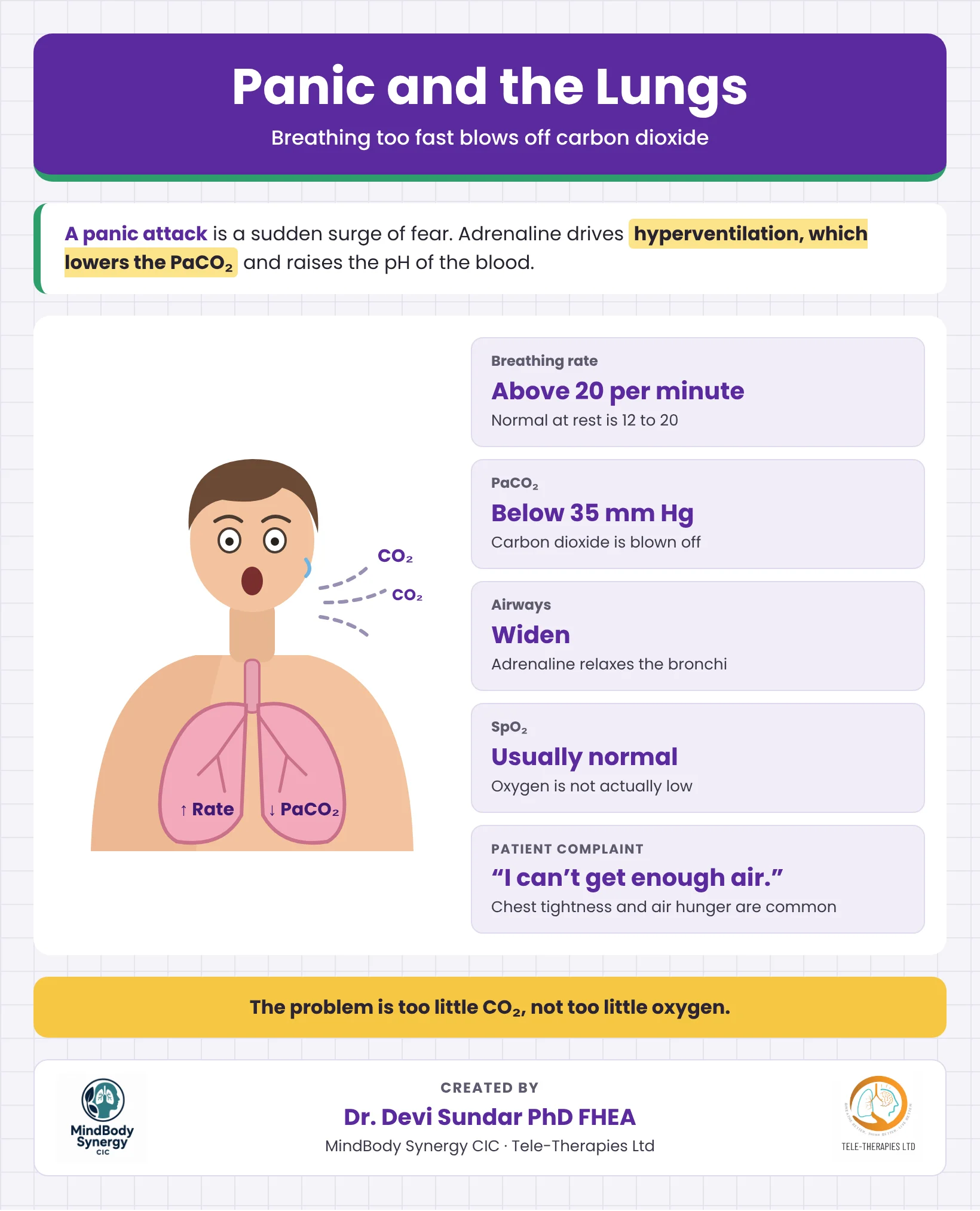
If you have ever had a panic attack, you will know the list: a pounding heart, breathlessness, dizziness, tingling hands, a churning stomach and a sense that something terrible is about to happen. These feel like signs of danger. In fact, they are signs of a healthy stress response switched on at the wrong moment.
This post walks through the body organ by organ, then answers a question many clients ask: does having frequent panic attacks harm your long-term health?
The lungs and blood: too little carbon dioxide, not too little oxygen
The most frightening symptom of panic, feeling that you cannot get enough air, is caused by breathing too much rather than too little. Adrenaline drives you to breathe faster and deeper, often above 20 breaths a minute when 12 to 20 is normal at rest. This is called hyperventilation.
Your oxygen level usually stays normal. What changes is carbon dioxide (CO₂), which you blow off faster than your body makes it. In the blood, CO₂ forms a weak acid. Lose CO₂ and the blood becomes slightly too alkaline, a state called respiratory alkalosis. During panic, blood pH can rise above 7.45 (normal 7.35 to 7.45) and carbon dioxide can fall below 35 mm Hg (normal 35 to 45).
This small chemical shift explains several symptoms:
- Tingling and cramping. Alkaline blood makes a protein called albumin hold on to more calcium, so less free calcium is available to nerves and muscles. The result is pins and needles in the lips and fingers, and sometimes cramped, clawed hands.
- Air hunger. Your brain senses the low CO₂ and the tight chest muscles, and reads both as suffocation, so you breathe even harder.
- Small changes in potassium, sugar and lactate. Adrenaline and alkalosis push potassium into cells and push blood sugar up.
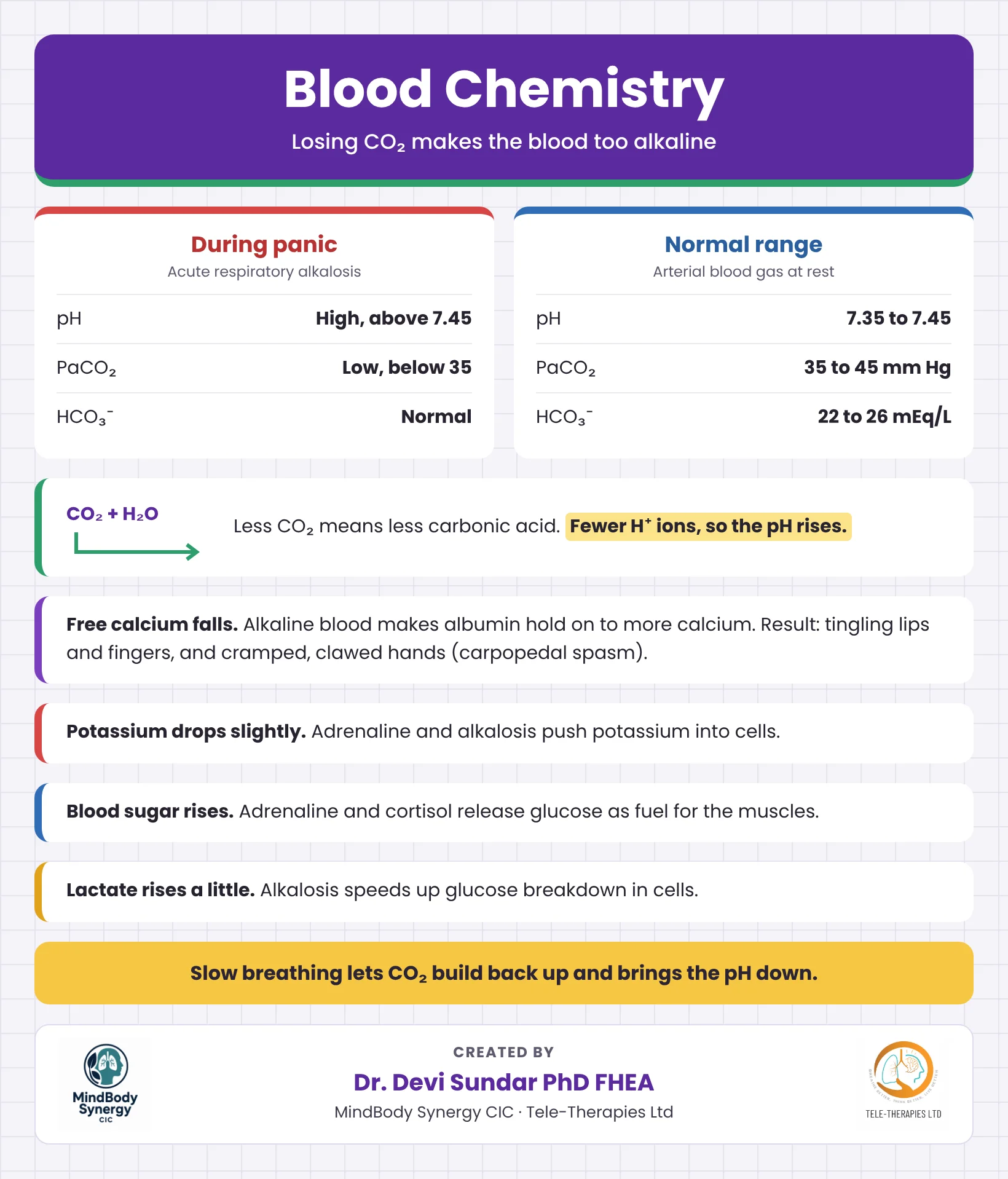
The good news is that the fix is simple. Slow, gentle breathing lets CO₂ build back up and brings the pH back to normal.
The brain: a false alarm
Panic starts in the brain, when the threat-detection system reacts to a sensation as if it were danger. Four areas do most of the work:
- Amygdala. It notices a body sensation, such as a skipped beat or a tight chest, labels it a threat and sounds the alarm.
- Hypothalamus. It switches on the sympathetic nervous system and starts the cortisol chain (CRH, then ACTH, then cortisol).
- Locus coeruleus. This small area in the brainstem floods the brain with noradrenaline, making you hyper-alert.
- Prefrontal cortex. The reasoning brake is turned down, which is why it is so hard to think clearly during an attack.
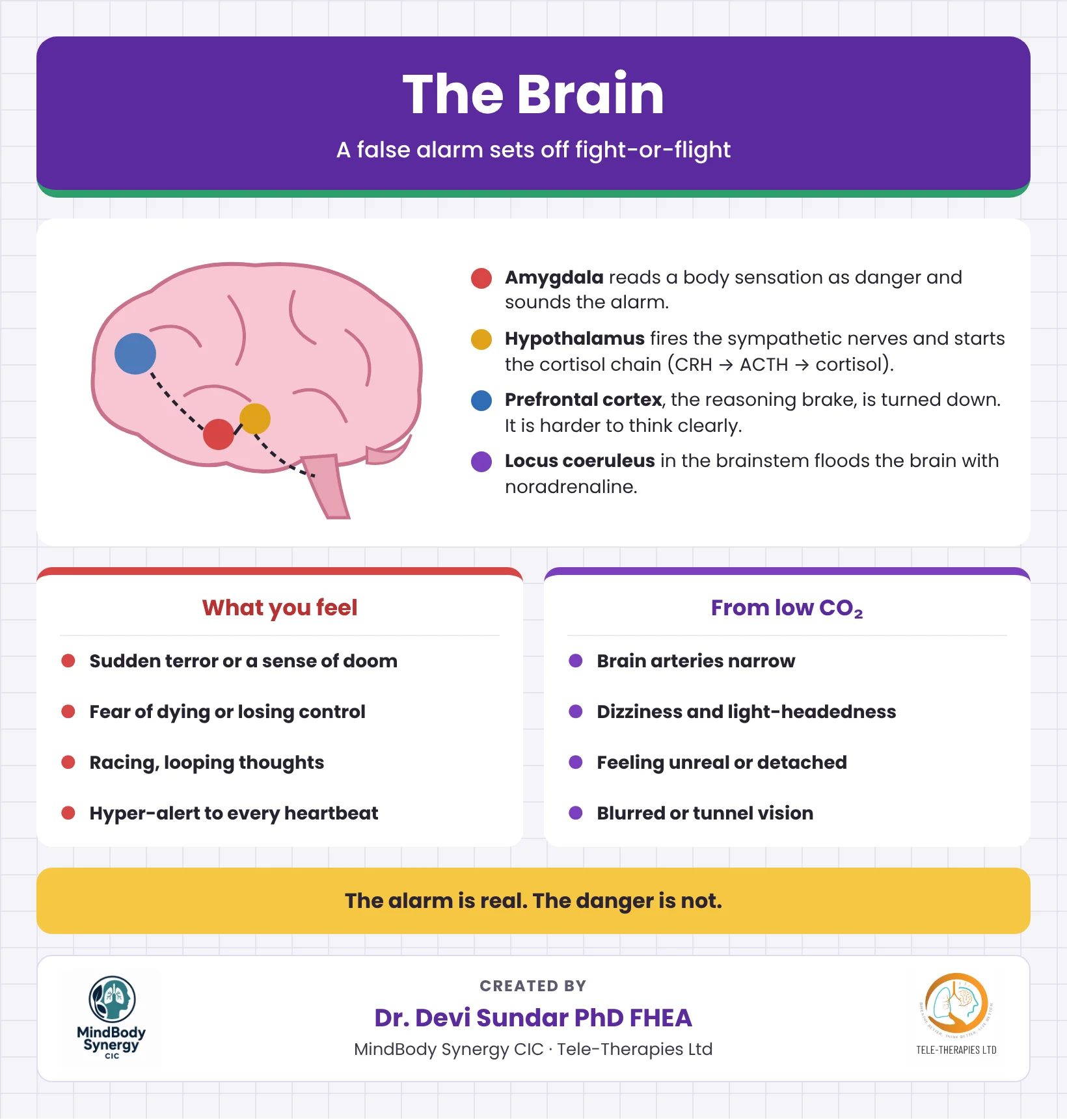
Low CO₂ adds a second layer. It narrows the blood vessels in the brain, which brings on dizziness, light-headedness, blurred or tunnel vision, and a strange feeling of being unreal or detached. Add racing thoughts and a fear of dying or losing control, and it is easy to see why panic feels like a medical emergency.
The key message: the alarm is real, but the danger is not.
The heart: faster, harder, louder
Adrenaline turns up the heart’s rate, force and pressure all at once. Heart rate often climbs above 100 beats a minute, a normal response called sinus tachycardia. Blood vessels tighten and blood pressure rises, and each beat feels stronger and pounding in the chest and neck.
Three other changes are common:
- Palpitations and skipped beats. Adrenaline makes extra (ectopic) beats more likely. They feel alarming but are usually harmless.
- Chest pain or tightness. This usually comes from tense chest-wall muscles and overbreathing rather than the heart itself.
- Less vagal braking. The vagus nerve normally calms the heart. During panic it is switched down, so heart rate variability falls.
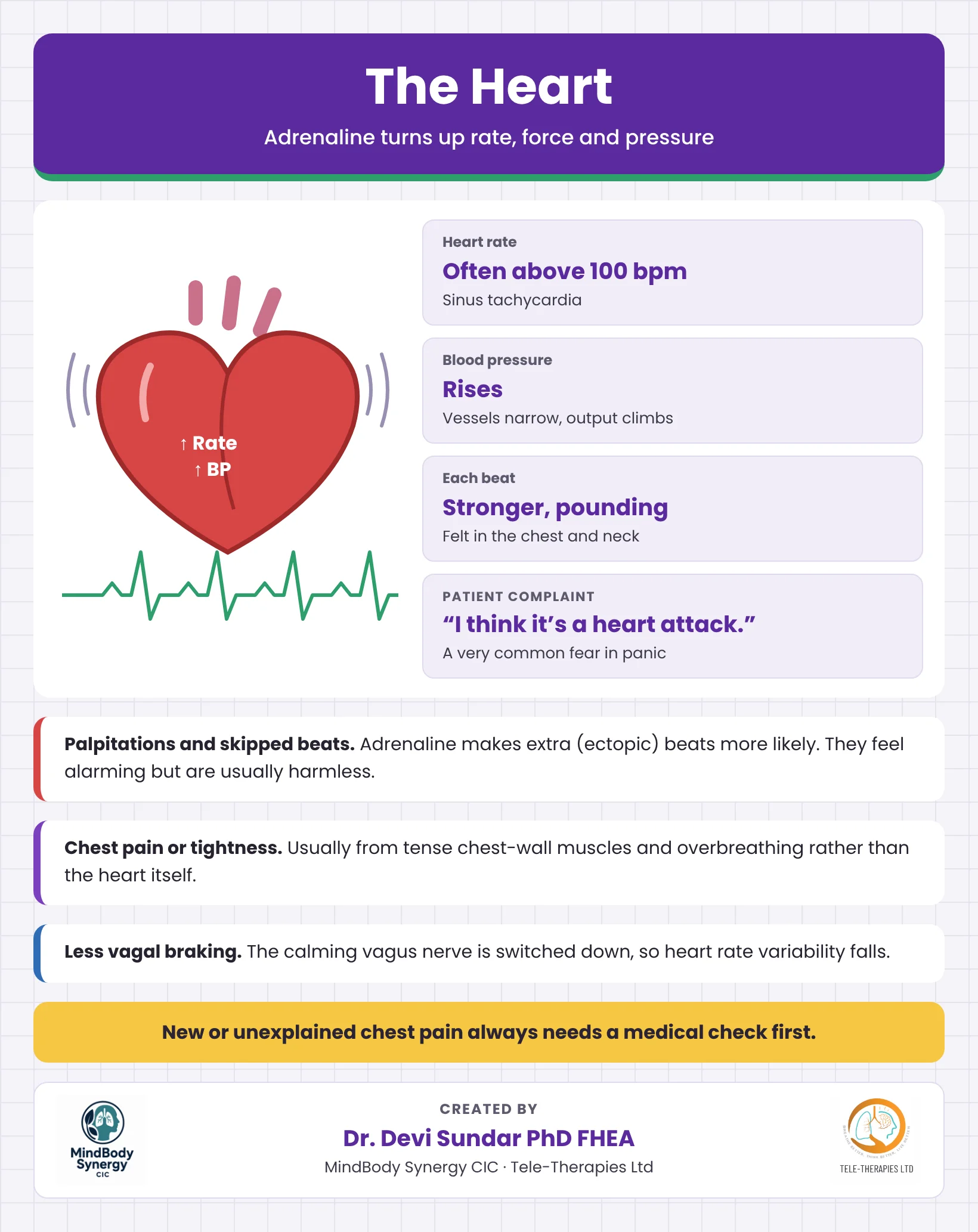
“I think I’m having a heart attack” is one of the most common fears during panic. In a healthy heart, the attack itself does no damage. But new or unexplained chest pain always needs a medical check first. Panic should be the conclusion after other causes have been ruled out, not the first assumption.
Adrenals, kidneys, liver and pancreas: hormones and fuel
Behind the scenes, a group of organs releases stress hormones and floods the blood with fuel for muscles that never get used.
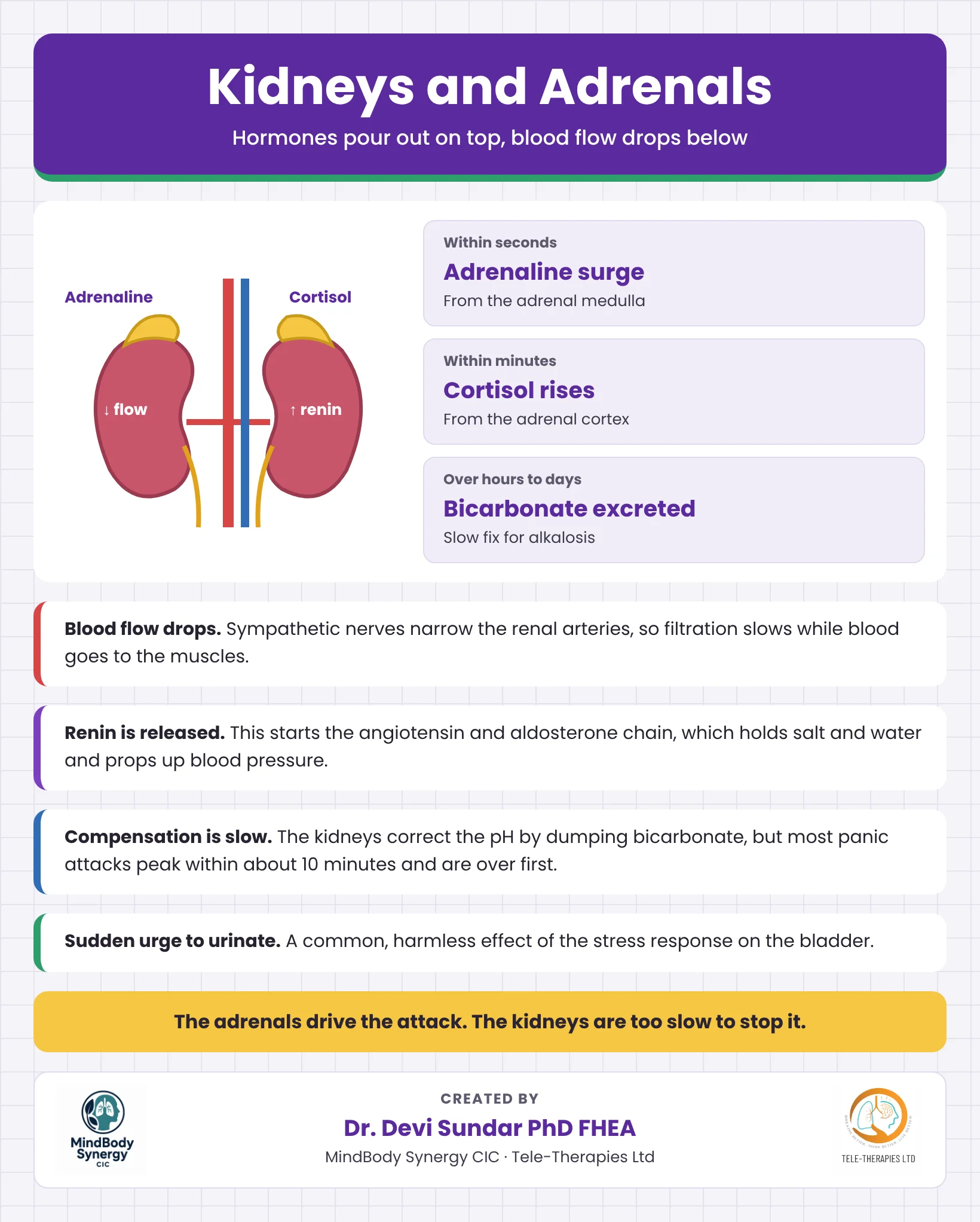
The adrenal glands sit on top of the kidneys and drive the whole attack. They release adrenaline within seconds and cortisol within minutes.
The kidneys take a back seat. Sympathetic nerves narrow the kidney arteries, so blood is sent to the muscles instead and filtering slows. The kidneys also release renin, which starts a hormone chain that holds on to salt and water to support blood pressure. They can correct the alkaline blood by getting rid of bicarbonate, but this takes hours to days. Most panic attacks peak within about 10 minutes, long before the kidneys catch up. Many people also feel a sudden urge to urinate, a common and harmless stress effect.
The liver: the body’s fuel tank
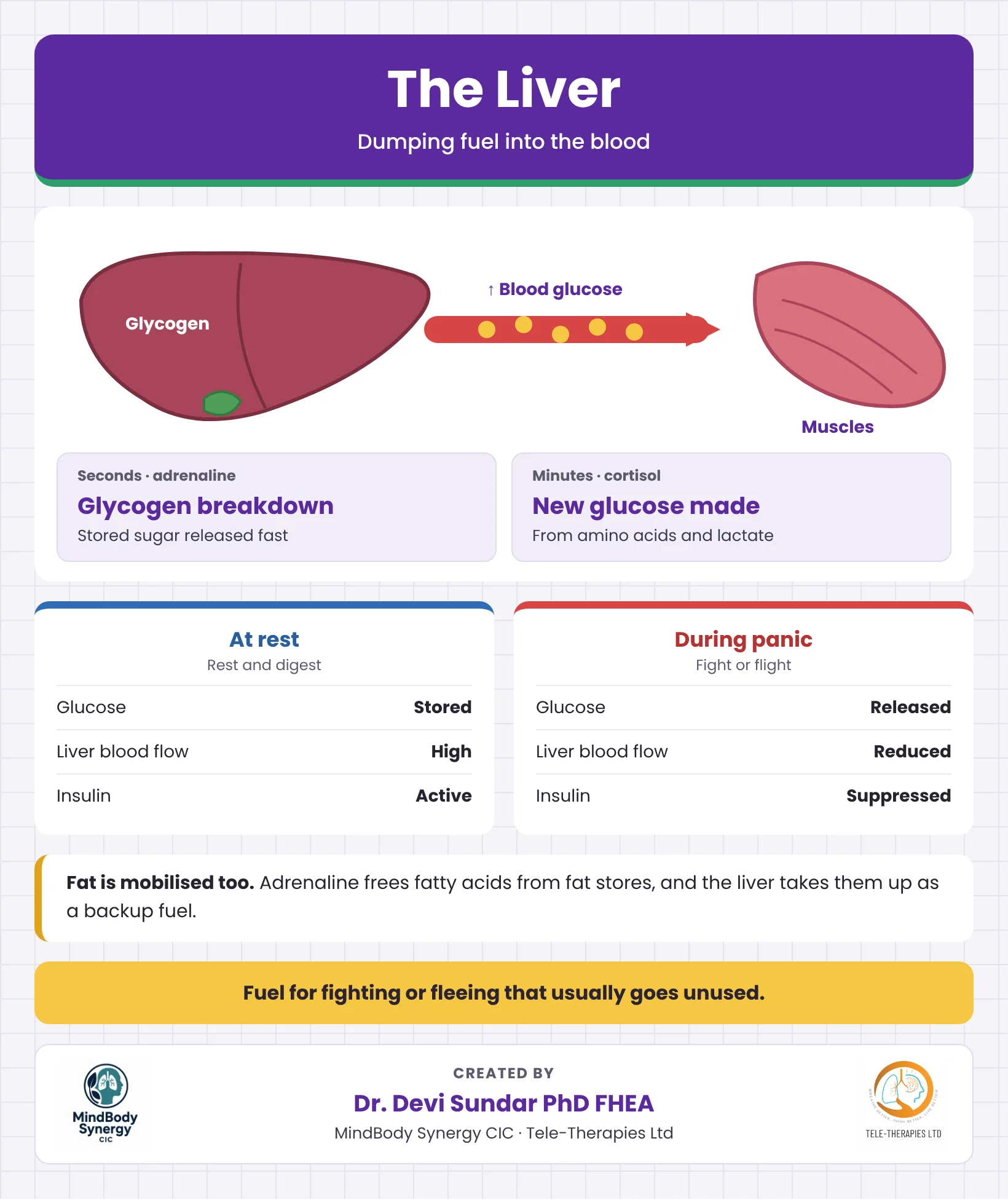
- Within seconds, adrenaline breaks down stored glycogen and releases glucose.
- Within minutes, cortisol has the liver make new glucose from amino acids and lactate.
- Adrenaline also frees fat from fat stores as a backup fuel.
The pancreas: insulin down, glucagon up
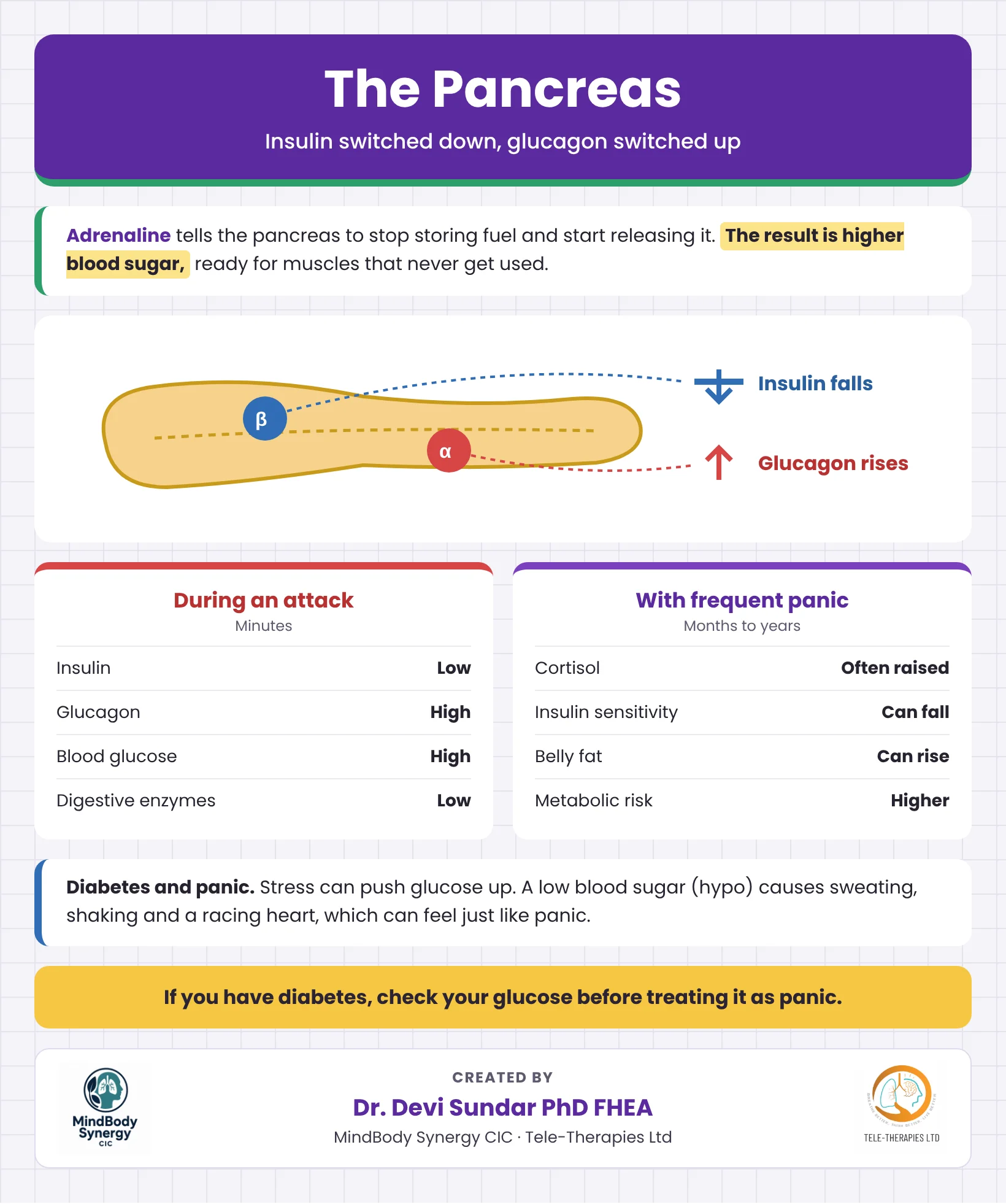
Adrenaline tells the pancreas to stop storing fuel and start releasing it. The result is higher blood sugar, ready for muscles that never get used.
There is one important practical point. If you have diabetes, check your blood sugar before treating symptoms as panic. A low blood sugar (a hypo) causes sweating, shaking and a racing heart, which can feel exactly like a panic attack. Over months and years, constantly raised cortisol is also linked with insulin resistance and higher metabolic risk.
The gut and reproductive system: put on hold
Fight-or-flight treats digestion and reproduction as jobs that can wait. Blood is moved away from the gut and pelvis and sent to the muscles.
The gut. The brain and gut are wired together through the vagus nerve, and the alarm travels both ways. During panic:
- The stomach relaxes and empties more slowly, which feels like nausea, “butterflies” or a knot.
- Saliva drops, causing a dry mouth, and many people feel a lump in the throat.
- Stress hormones (CRH) can speed up the large bowel, causing cramps, bloating or a sudden urge to open the bowels.
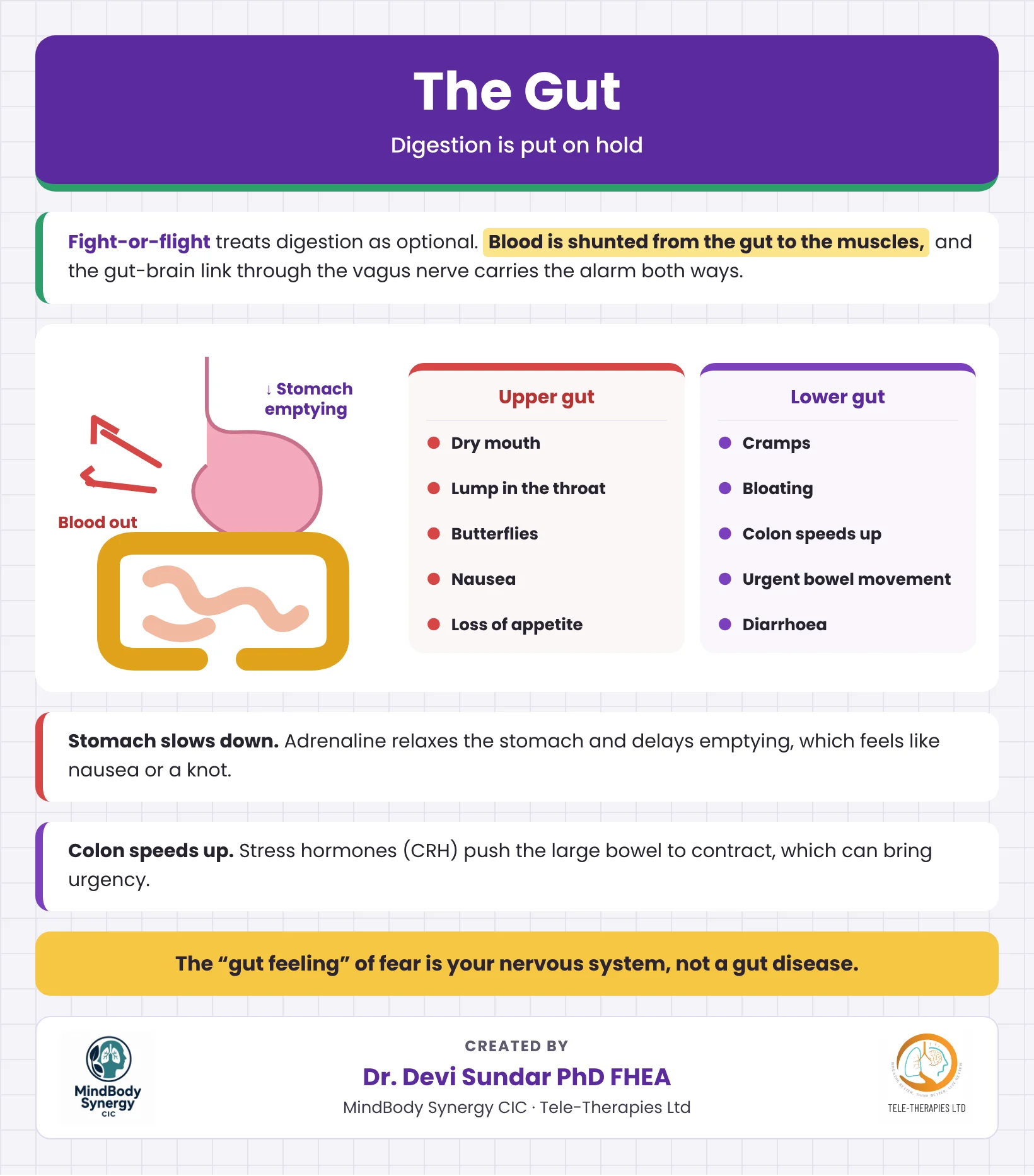
That “gut feeling” of fear comes from the nervous system. It is not a sign of gut disease.
The reproductive system. In the short term, arousal is switched off. Erections can be harder to get or keep, and natural lubrication drops. With frequent panic, the stress hormones CRH and cortisol damp down GnRH, the brain signal that drives the ovaries and testes. Over time this can mean:
- lower libido
- irregular or missed periods
- lower testosterone
- a growing fear of sex itself, if symptoms are linked with intimacy
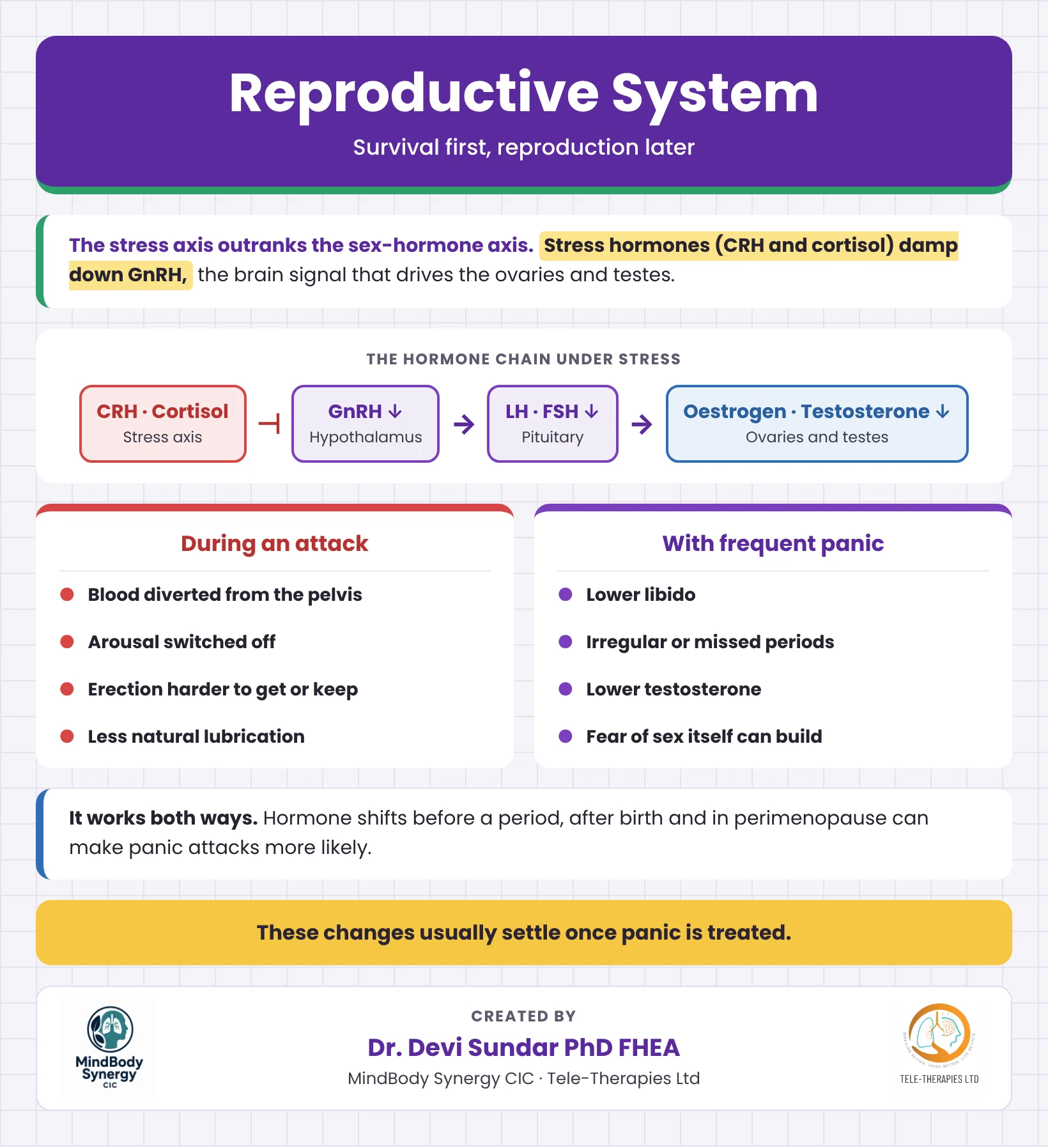
It works both ways. Hormone shifts before a period, after birth and in perimenopause can make panic attacks more likely. Reassuringly, these changes usually settle once panic is treated.
Does frequent panic shorten life or weaken immunity?
A single panic attack does no lasting harm. Frequent, untreated panic over years is different: it is linked with higher heart risk, a strained immune system and faster cellular ageing. These are associations rather than proof of cause, and the evidence suggests they ease with recovery.
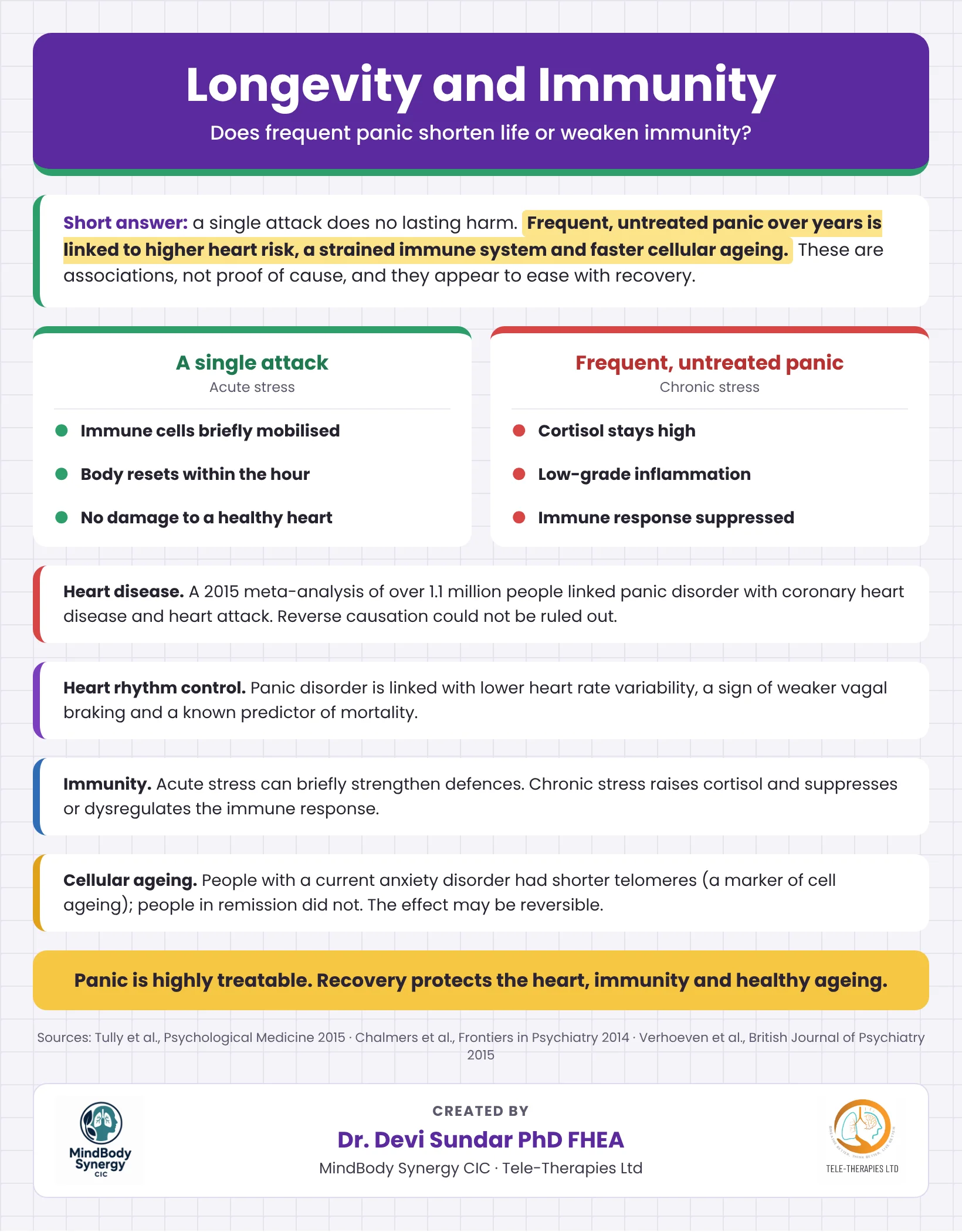
Heart disease. A 2015 meta-analysis of over 1.1 million people found that panic disorder was independently associated with coronary heart disease, heart attack and major cardiac events. The authors noted that reverse causation could not be ruled out: early heart problems might also trigger panic.
Heart rhythm control. A 2014 meta-analysis found that people with anxiety disorders, including panic disorder, have lower heart rate variability. This reflects weaker calming input from the vagus nerve and is a known predictor of mortality.
Immunity. Acute stress can briefly strengthen the body’s defences. Chronic stress is different: it keeps cortisol high through the stress axis, which suppresses or dysregulates immune responses and drives low-grade inflammation.
Cellular ageing. A 2015 study in the British Journal of Psychiatry found that people with a current anxiety disorder had shorter telomeres, the protective caps on chromosomes that shorten with age. People whose anxiety had gone into remission did not. This suggests the effect may be at least partly reversible.
The message is hopeful. The risks come from years of untreated panic, and panic disorder is one of the most treatable mental health conditions.
What helps, and when to see a doctor
Because so many panic symptoms come from overbreathing and adrenaline, the body itself offers a way out.
- Slow your breathing. Breathe gently through your nose, with the out-breath longer than the in-breath. This lets CO₂ rise back to normal and switches the vagus nerve back on.
- Name what is happening. Tell yourself: “This is adrenaline and low CO₂. It is uncomfortable, not dangerous.” Understanding the body helps the prefrontal cortex take back control.
- Let it peak and pass. Most attacks peak within about 10 minutes. Fighting or fleeing the sensations tends to keep the alarm going.
- Get the right support. Cognitive behavioural therapy (CBT) is the recommended first-line treatment for panic disorder in the UK. Breathing retraining and other mind-body approaches can work alongside it.
See a doctor if:
- it is your first attack, or your symptoms have changed
- you have chest pain, fainting or severe breathlessness, which should be checked as an emergency (call 999 in the UK)
- you have diabetes, heart disease or lung disease
- panic attacks are frequent or are stopping you from living the life you want
Panic feels like danger, but it is your body trying to protect you. With understanding and the right support, the alarm can be turned down.
Sources
- Tully PJ et al. (2015). Panic disorder and incident coronary heart disease: a systematic review and meta-regression in 1,131,612 persons and 58,111 cardiac events. Psychological Medicine 45(14): 2909–2920.
- Chalmers JA et al. (2014). Anxiety disorders are associated with reduced heart rate variability: a meta-analysis. Frontiers in Psychiatry 5: 80.
- Verhoeven JE et al. (2015). Anxiety disorders and accelerated cellular ageing. British Journal of Psychiatry 206(5): 371–378.
- Review: the immunology of stress, acute vs chronic effects. PubMed Central.
- Chronic stress, cortisol dysregulation and metabolic health. PubMed Central.
This article is for education only and is not a substitute for medical advice.
Share this conversation
#PanicAttack #PanicAttackSymptoms #Hyperventilation #AnxietyAndBreathlessness #EmotionalBreathlessness #MindBodyHealth #MentalHealthAwareness #BreathingMindWithDevi
You don’t need to do this alone
Panic can feel isolating, but support makes a real difference. At Tele-Therapies we provide personalised online support for panic, anxiety and emotional breathlessness — alongside your medical care. Check out our programmes at tele-therapies.org, or book a free discovery call to talk through what would help you.